
Relief for Teeth Grinding, Jaw Pain and Headaches
Do you suffer from chronic headaches or migraines? Do you often experience sore neck muscles, jaw pain, or aching teeth? Many people visit chiropractors or physiotherapists regularly because of persistent head and neck pain without realising that the cause may be related to teeth grinding or jaw joint problems.
At Allenby Gardens Dental, our dentists assess patients experiencing orofacial pain, a condition that affects the muscles, joints and nerves of the head and neck. Some patients experience constant toothache even though there is no decay or infection present.
During your visit, our dentists will thoroughly examine your teeth, gums, temporomandibular joints (TMJ) and facial muscles to identify the underlying cause of your symptoms. In some cases, X-rays, temperature tests or pressure tests may be required to help provide an accurate diagnosis.
What Is TMJ Disorder (TMD)?
One of the most common causes of orofacial pain is Temporomandibular Joint Disorder (TMD). This condition affects the jaw joints and surrounding muscles that control jaw movement.
TMD is very common and may affect many people at some point in their lives. However, diagnosing the exact cause can be difficult because several factors may contribute to the condition.
Symptoms of TMD:
- Clenching or grinding leading to the wearing of teeth
- Toothache
- Headaches, migraines, neck and shoulder muscle pain
- Limited jaw movement
- Locked jaw
- Clicking or grating noises when opening or close mouth
- Earache
Some of the factors that aggravate include:
- Clenching or grinding
- Missing teeth
- Emotional or physical stress
- Habits
- Injuries of the TMJ: fractures or dislocation
- Arthritis
- Hypermobility of joints
Custom Night Guards for Teeth Grinding
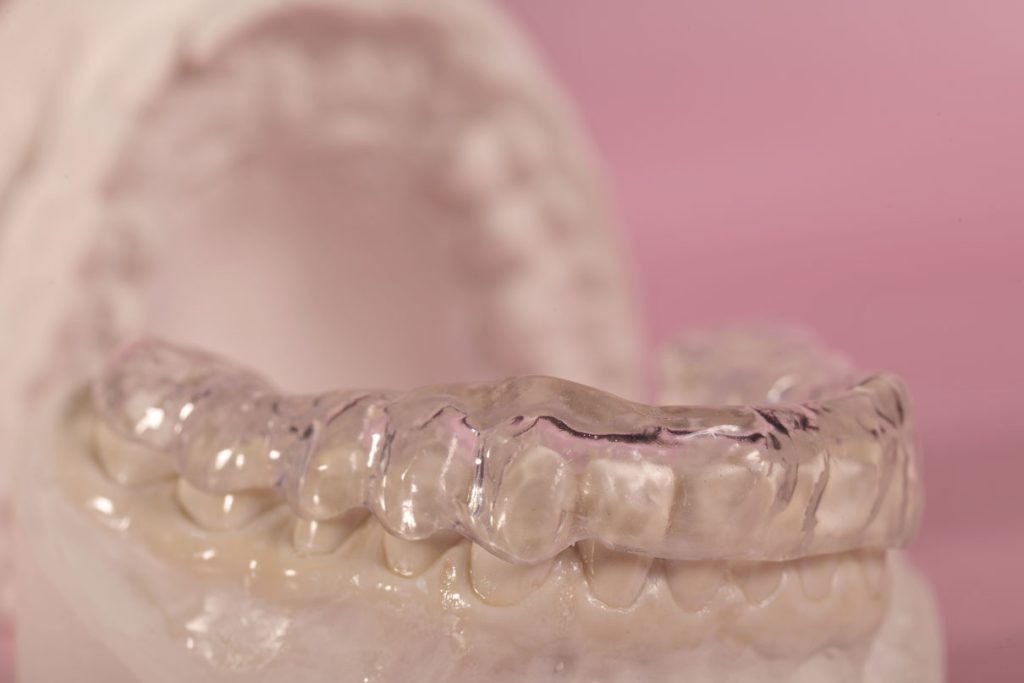
If our dentists determine that teeth grinding or jaw clenching contributes to your symptoms, we may recommend a custom-made night guard (also known as an occlusal splint).
A custom night guard helps:
- Reduce pressure on the jaw joints
- Protect teeth from grinding damage
- Relax jaw muscles during sleep
- Reduce headaches and facial pain
Unlike over-the-counter guards, a professionally made night guard is designed specifically for your teeth to ensure comfort and effectiveness.
Treatment and Management
In addition to a night guard, our dentists may recommend several strategies to help manage TMJ symptoms. These may include relaxation techniques, jaw exercises, and lifestyle changes to reduce excessive jaw movement.
In some cases, we may refer patients to a physiotherapist for muscle therapy, massage or stretching exercises to relieve tension in the jaw and neck muscles.
If symptoms are severe or persistent, referral to a specialist may be required. However, surgery is rarely necessary.